

A line forms at the restroom sink. The water is cold. Staff look to you for answers. In that moment, the hot water system is not just equipment—it’s service, safety, and your brand on the line. Here’s the direct answer up front: if the unit is mid‑life, safe, and parts are available, repair is usually wise; if the tank leaks, key safeties fail, parts are obsolete, or demand has outgrown the system, replacement is the prudent move. This guide shows how to make that call quickly and correctly.
Hyannis MA Plumber works across Hyannis every week, helping facilities restore hot water with less disruption. The goal here is straightforward: choose right the first time and keep your doors open.
Table of Contents
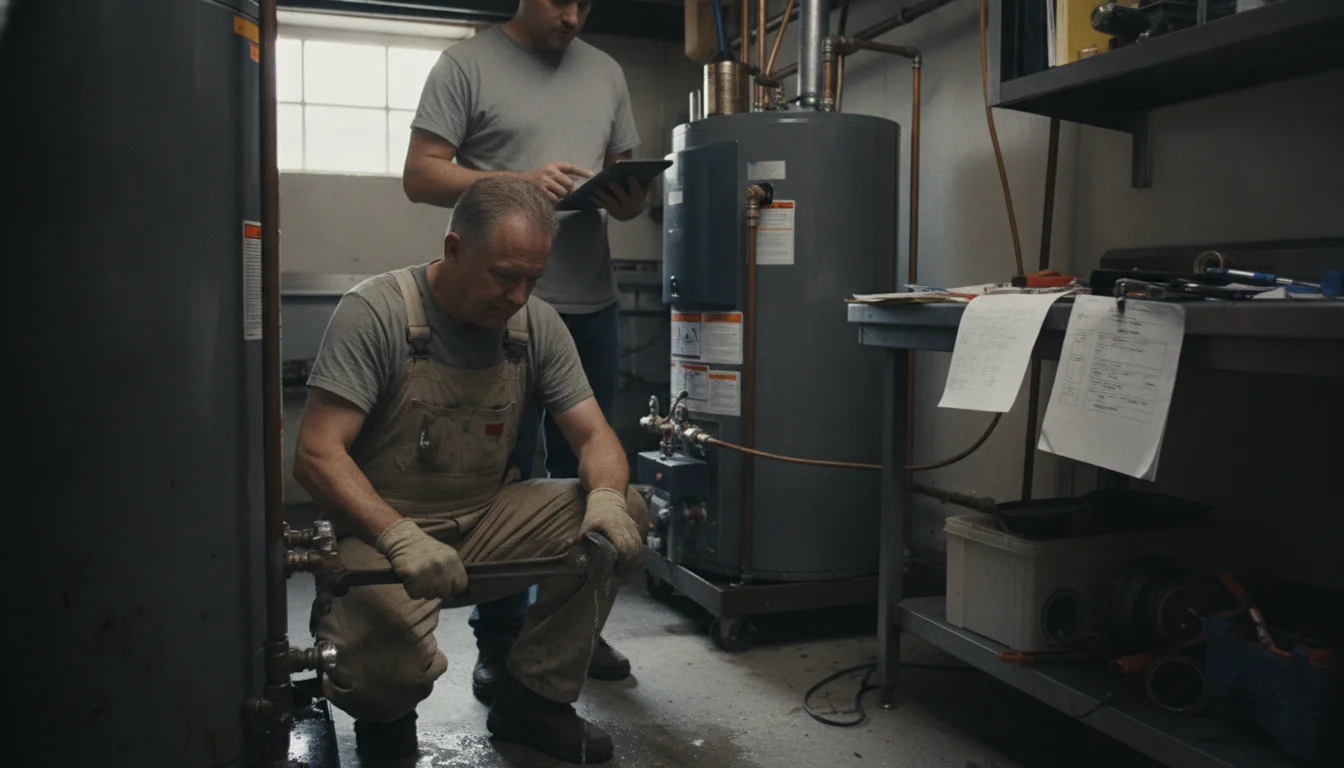
- Repair vs Replacement: The Quick Answer and What It Means for Your Facility
- Diagnosing the Problem: Symptoms, Root Causes, and Hidden Risks
- Costs That Matter: Repair Quotes, Replacement Pricing, and Total Cost of Ownership
- Operational Impact: Downtime, Safety, and Code Compliance in Commercial Settings
- Choosing Technology: Tank, Tankless, and Hybrid Options for Business Demand
- Lifecycle Factors: Age, Warranty, Maintenance History, and Monitoring
- Make the Call: A Practical Decision Checklist and What to Expect from Service
- Frequently Asked Questions
- Key takeaways
- Conclusion
Repair vs Replacement: The Quick Answer and What It Means for Your Facility
A commercial water heater is a high‑capacity system built to serve many fixtures simultaneously. Common configurations include large storage tanks, tankless rack systems, and boilers paired with storage tanks. These supply restrooms, kitchens, and process or lab sinks. They differ from residential units in size, recovery rate, and duty cycle. Recovery rate is how quickly the heater raises water back to set temperature after use.
Here’s the quick rule of thumb. If the unit is under mid‑life, the tank is sound, parts are available, and the fault is identifiable, repair tends to be the right choice. If the tank is leaking, safety components won’t pass testing, parts are obsolete, or the system can’t meet peak demand, replacement is usually the smarter path. Consider age and risk alongside today’s bill.
Why this matters: hot water uptime underpins health standards, hand‑washing, and food service. A swift, durable fix is ideal. A patch that fails during peak hours is not. For many sites in Hyannis, a planned replacement avoids surprise closures and repeat outages.
H3: What counts as “commercial” and typical configurations
In many buildings, “commercial” includes restaurants, offices, schools, clinics, retail, and light manufacturing. Typical options include:
- High‑efficiency storage tanks with substantial BTU input
- Multi‑unit tankless racks for modular, on‑demand flow
- Boilers with indirect tanks for steady supply
Each has distinct venting, gas, or electrical needs. A qualified pro will match the system to peak flow and recovery targets.
Diagnosing the Problem: Symptoms, Root Causes, and Hidden Risks
When hot water fails, the visible symptom is only the starting point. “No hot water” can indicate a failed igniter, gas supply problem, tripped breaker, or a control board fault. Fluctuating temperatures often trace back to mixing valve issues, scale on heat exchangers, or an off‑range thermostat. Slow recovery may point to a weak burner, blocked flue, undersized gas line, or heavy tank sediment.
Leaks are telling. A drip at a fitting might be a simple gasket or valve issue. Water from a tank seam suggests a failed lining, which is not repairable. Pressure irregularities can originate from a compromised expansion tank, a stuck pressure relief valve, or backflow device problems. Gas faults may reflect low inlet pressure or dirty burners. Electrical faults may include failed elements or relays. Control failures often show as error codes, lockouts, or intermittent shutdowns.
Hidden risks count as well. Scale accumulation on heat transfer surfaces raises energy use and stress, and it reduces output. In storage tanks, a depleted anode rod leaves the lining unprotected. The anode rod is a sacrificial metal insert that slows corrosion. If it’s consumed, corrosion accelerates. Consider scheduling Anode Rod Replacement Water Heater service before the tank is too far gone.
H3: No hot water vs. not enough hot water
“No hot water” commonly points to a single failed component or a fuel/power interruption. “Not enough” hot water usually indicates sizing shortfalls, scale buildup, or mixing valve trouble. A professional diagnosis uses temperature logging, flow testing, gas pressure checks, and combustion or electrical tests. This reduces guesswork and helps avoid repeat breakdowns.
Costs That Matter: Repair Quotes, Replacement Pricing, and Total Cost of Ownership
Short‑term cost is the invoice you face today—parts, labor, and travel. But there’s also exposure to another outage if the current fix only treats symptoms. When equipment is old or parts are hard to source, the likelihood of a second call rises. That risk belongs in your real cost evaluation.
Long‑term cost is broader. Energy use tracks with efficiency, scaling, and controls. Modern high‑efficiency units can trim fuel use when kept clean and tuned. Tankless systems avoid standby losses. Well‑configured storage tanks can still deliver excellent efficiency with proper venting and controls. Downtime has a financial and reputational cost, too. A restaurant that loses hot water during service may need to close prep areas. A gym without showers risks refunds and poor reviews. A strategic replacement that resolves chronic faults can prevent those losses.
Local and state utility programs sometimes offer rebates for efficient commercial models in the United States. Check your utility and state energy sites. The U.S. Department of Energy’s Office of Energy Efficiency & Renewable Energy provides a commercial water heating technology overview with sizing and efficiency basics; see their summary here: Commercial Water Heating | EERE.
H3: How to think about parts vs new equipment
If a part is common, in stock, and the unit is mid‑life, repair is sensible. If parts are back‑ordered, discontinued, or the unit fails frequently, plan a change‑out. Total cost of ownership includes energy, maintenance calls, and operational disruptions. A higher one‑time spend can return value month after month.
Operational Impact: Downtime, Safety, and Code Compliance in Commercial Settings
Hot water touches many areas at once. Restrooms require stable warm water for hand hygiene. Kitchens depend on set temperatures for washing and sanitizing. Labs and process sinks may require precise setpoints. The right plan keeps hot water available during peak periods and prevents after‑hours surprises. In Hyannis, many operations schedule work off‑hours to minimize impacts on guests and staff.
Safety is non‑negotiable. Scald protection is critical. A thermostatic mixing valve blends hot and cold water to deliver a safe temperature. Without it, small swings at the heater can create scald risk at fixtures. The Centers for Disease Control and Prevention notes that higher water temperatures can cause serious burns in seconds; see the CDC’s guidance on hot water burn prevention at Bath Safety and Scald Prevention for context on safe ranges.
Venting and combustion air are essential on gas units. Poor venting can lead to carbon monoxide hazards. Electric units require correct overcurrent protection and grounding. Code updates may trigger additional changes when replacing a unit. Many jurisdictions follow versions of the International Plumbing Code (IPC) and International Mechanical Code (IMC). Your installer should verify current local code requirements and secure any required permits.
H3: Compliance and documentation
A thorough service visit documents model and serial numbers, combustion readings or amp draws, setpoints, mixing valve settings, and any code notes. Keep these on file. They support health inspections, insurance requirements, and faster future troubleshooting.
Choosing Technology: Tank, Tankless, and Hybrid Options for Business Demand
There is no single best system for all buildings. High‑efficiency storage tanks store hot water and deliver rapid bursts, ideal for venues with sharp peaks like stadium restrooms at halftime. Tankless systems heat on demand; multi‑unit racks add redundancy and scale with actual use. They shine where space is tight and loads are steady or extended. Hybrid designs pair storage with high‑output heat sources or combine tanks and tankless for a balanced approach.
For gas equipment, confirm vent type and gas line capacity. For electric, verify available power, panel space, and potential demand charges. Controls matter as well. Smart staging and recirculation controls reduce wait times and trim energy use. Water quality is a factor, too. Hard water causes scale on heat exchangers. A Water Softener Installation can help reduce scaling and protect output. Where storage is used, larger Water Tanks can stabilize temperature swings and reduce burner cycling.
Plan for service access. Can technicians safely reach valves, vents, and controls? Are there isolation valves on recirculation loops? Is there a floor drain for maintenance? These practical layout choices pay off during repairs and annual service.
H3: Right system for your space and rhythm
- Restaurants: fast recovery and consistent sanitizing temperatures
- Hotels/gyms: long, steady draws and tuned recirculation controls
- Offices/retail: short, heavy restroom peaks around breaks and lunch
- Healthcare: tight control and redundancy for uptime
A professional will map fixtures, flow rates, and peak times to size the system correctly.
Lifecycle Factors: Age, Warranty, Maintenance History, and Monitoring
Every heater follows a wear curve. Commercial lifespans vary by make and conditions, but many storage tanks face rising failure risk as they age, with the curve steepening near end‑of‑life. You can flatten that curve with maintenance. Keep detailed records of service dates, replaced parts, and water quality checks. Warranty status can guide the choice as well; if key components remain under warranty, repair may be the better bet.
Watch for indicators that a unit is nearing the end. Frequent resets, rising energy use, rusty water, or visible corrosion signal trouble. A leak at the tank seam confirms internal failure, which calls for replacement. If anode inspections show heavy wear, schedule Anode Rod Replacement Water Heater service. The anode protects the tank from rust; replacing it can extend life if the tank is otherwise sound.
Remote monitoring helps. Many systems provide sensors and alerts for temperature, flow, and error codes. Alerts often catch faults before occupants notice and can log performance trends. A gradual decline in recovery rate may point to scale buildup. Early descaling prevents outages. If a pipe bursts near the heater, automatic shutoff sensors can limit water damage. For guidance on managing Legionella risk in building water systems, facilities often reference ASHRAE Standard 188; see ASHRAE’s overview of Legionellosis risk management here: ASHRAE 188 Summary.
H3: Planned maintenance that pays back
A simple plan can include:
- Annual inspection, cleaning, and descaling as needed
- Anode checks on tanks; replace before depletion
- Mixing valve testing and recalibration
- Recirculation balance and pump verification
- Water quality review and softener upkeep
These steps trim energy use and reduce surprise outages.
Make the Call: A Practical Decision Checklist and What to Expect from Service
Before reaching out, gather essentials. Note the make, model, and serial number. Write down symptoms, error codes, and when issues occur. Confirm gas or power status and any recent changes. List how many fixtures are affected. Note access limits and preferred service windows. If you have building management logs, save them. In Hyannis, clear information shortens on‑site time and helps technicians arrive with the right parts.
When you request Water Heater Repair, expect a structured assessment. A professional should test gas pressure or electrical draw, verify venting, evaluate combustion or element performance, and inspect safety controls and mixing valves. They should measure supply and return temperatures on recirculation loops. For tank systems, they may check sediment and inspect the anode. For tankless racks, they will review individual unit data and staging order.
The typical timeline is straightforward. Same‑day triage isolates the fault and stabilizes hot water when possible. Readily available small parts can be replaced during the first visit. If the tank has failed or a fix isn’t viable, Water Heater Installation planning begins. That includes load sizing, venting or electrical checks, permits, and a cutover plan. Many teams can complete a like‑for‑like change‑out overnight to minimize disruption. After service, document settings and brief staff on any new controls.
H3: Decision checklist
- Is the tank structurally sound and leak‑free?
- Are parts available and under warranty?
- Does the repair address root cause rather than just symptoms?
- Will today’s choice reduce future downtime?
- Do you need efficiency gains or more capacity now?
If most answers point to age and risk, choose replacement.
Frequently Asked Questions
Q: How can a business decide between commercial water heater repair vs replacement?
A: Start with age, safety, and tank condition. If the tank leaks or parts are obsolete, replace. If the unit is mid‑life, safe, and parts are available, repair can be effective. Factor in downtime risk and energy use to decide on the best long‑term value.
Q: What should we do first when there is no hot water?
A: Check basics: power, gas supply, breakers, and error codes. Reduce non‑critical hot water use. Log symptoms and times. Then call for Water Heater Repair. A professional can test fuel delivery, controls, and safety devices, and often restore service quickly while planning a durable fix.
Q: How often should an anode rod be checked on a commercial tank?
A: Many facilities inspect anodes annually, and more frequently with hard water. The anode protects the tank from rust. If it is more than half consumed, plan Anode Rod Replacement Water Heater service. Good water treatment and regular checks can extend tank life and maintain performance.
Q: What should I do if a pipe bursts near the water heater?
A: Shut off the nearest isolation valve. If safe, cut power or gas to the heater. Clear people from the area. Call for emergency help. Document where the leak began. After repairs, have a pro inspect the heater, flue, and controls, and check for electrical or combustion damage.
Q: Who installs gas lines for a new commercial water heater?
A: Licensed plumbers size and install gas lines for water heaters. They confirm capacity, pressure, and code‑compliant venting. During Water Heater Installation, they also verify combustion air and safety controls. Proper gas line sizing supports stable firing, recovery rate, and reliable performance.
Key takeaways
- Repair when the unit is safe, mid‑life, and parts are available.
- Replace when the tank leaks, safeties fail, or demand exceeds capacity.
- Plan for uptime, safety, and code as carefully as today’s invoice.
- Match technology to demand: tank, tankless, or hybrid.
- Keep records and maintenance to extend life and cut risks.
Conclusion
Your hot water system underpins health, safety, and the customer experience. Making a clear, timely choice on repair or replacement protects all three. Hyannis MA Plumber serves the Mid‑Cape region with structured diagnostics and steady project delivery, from Water Heater Repair to full Water Heater Installation and Water Tanks upgrades. For local help in Hyannis and across Massachusetts, Contact us.
If you are not sure which of these you are dealing with, it is worth having someone look at it before it turns into a bigger job. Get in touch with Hyannis MA Plumber today and we will tell you where you stand.